
Common Area Maintenance in Texas HOAs: Who Is Responsible and How to Budget for It

When homeowners pay dues every month, the question of what that money is actually for often stays vague until something breaks. The entrance landscaping starts struggling. The pool deck shows cracks. The walking path floods. And suddenly everyone wants to know: whose job is this, and where is the money supposed to come from?
This post answers both questions clearly. It covers what common areas legally means in Texas HOA communities, where the law places maintenance responsibility, how operating budgets and reserve funds are supposed to work together, and what happens when communities skip the long-term financial planning that holds it all together.
TL;DR
Texas HOAs are legally responsible for maintaining all common areas defined in their recorded Declaration and dedicatory instruments, including entrances, landscaping, pools, parks, walkways, shared fencing, and stormwater infrastructure.
Individual homeowners are responsible only for property within their own lot boundaries, with limited exceptions defined in the CC&Rs.
HOA budgets have two distinct components: an operating budget for routine annual expenses and a reserve fund for major, infrequent capital repairs and replacements.
Texas Property Code Section 204.010 gives boards the authority to adopt reserve budgets, but Texas has no statutory minimum for reserve funding.
According to Association Reserves, a national reserve study firm that reviewed over 19,000 completed reserve studies, up to 70 percent of HOA reserve funds are underfunded.
The Community Associations Institute recommends reserves funded to at least 70 percent of anticipated future capital replacement costs as the standard benchmark for financial health.
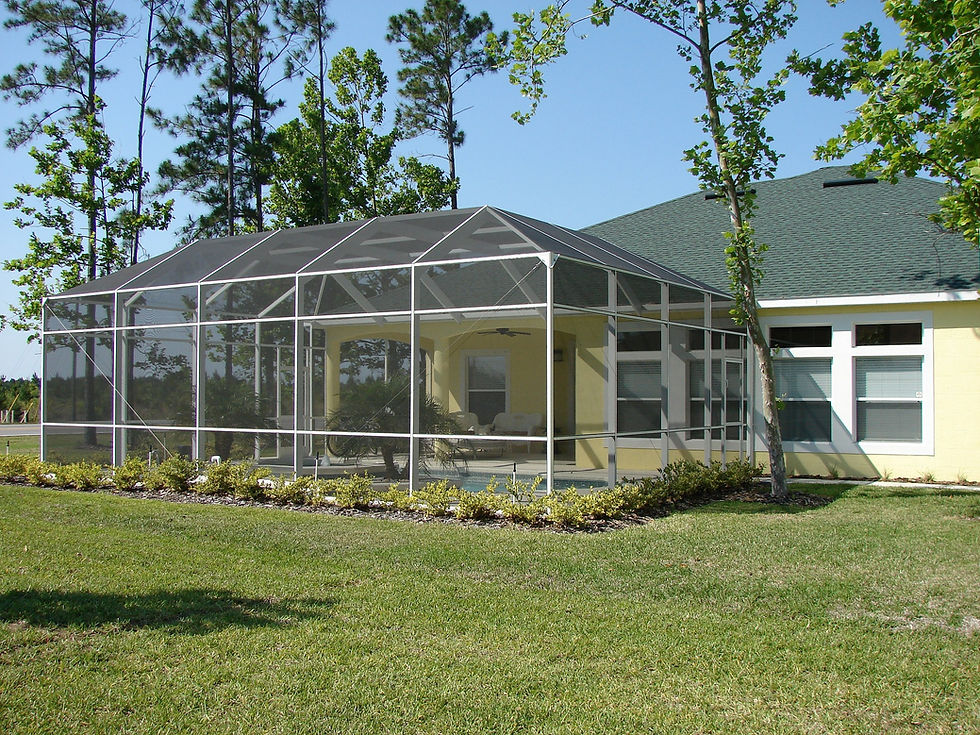
1. What "Common Areas" Means in a Texas HOA
The term common area gets used loosely in everyday conversation, but in a Texas HOA it has a specific legal meaning. Common areas are defined in the community's
Declaration of Covenants, Conditions, and Restrictions (CC&Rs) and in the dedicatory instruments recorded with the county clerk. Those documents determine what the HOA owns and is responsible for maintaining.
In most Central Texas HOA communities, common areas include some or all of the following:
Community entrances and monument signage. The landscaping, lighting, irrigation, masonry, and signage at every community entry are typically HOA property. In communities across New Braunfels, San Marcos, and Round Rock, these entry features are among the most visible assets in the community and directly shape how residents and prospective buyers perceive the neighborhood.
Landscaped medians and right-of-way areas. Many Texas HOA communities include planted medians along internal streets or along the community perimeter. These are typically HOA-maintained even when they sit adjacent to public roadways.
Walking paths, jogging trails, and internal sidewalks. Pathways within the community boundary that connect amenities or provide recreational access are generally HOA property. Sidewalks along public streets may fall to the municipality, but internal paths almost always fall to the HOA.
Swimming pools and aquatic features. Pools are among the most expensive common area assets to maintain and the most visible to residents. Chemical treatment, mechanical systems, decking, fencing, and seasonal maintenance are HOA obligations.
Playgrounds and recreational amenities. Equipment inspections, surface material replacement, and structural integrity of playground components are HOA responsibilities. In Texas, deferred playground maintenance also creates liability exposure for the association.
Clubhouses and community buildings. Any shared building, whether a fitness center, event space, or restroom facility associated with a pool, is an HOA asset requiring routine maintenance and periodic capital investment.
Shared perimeter fencing. Fencing along the outer boundary of the community, and sometimes between common areas and individual lots, is typically an HOA obligation. Homeowners' fencing within their own lot is their individual responsibility.
Stormwater infrastructure: detention and retention ponds. This is one of the most frequently overlooked and most costly common area obligations in Central Texas. Detention ponds are required by many municipalities to manage stormwater runoff from residential developments. Once the community is built out and accepted, the HOA typically takes responsibility for mowing pond banks, maintaining inflow and outflow structures, removing invasive vegetation, and ensuring the pond functions as designed. In San Antonio and Austin, where development density has made stormwater management requirements a pressing issue, detention pond maintenance is a significant and recurring budget item for many HOAs.
The key point here is that common areas are defined by each community's own recorded documents, not by a universal state standard. Two communities in the same city may have meaningfully different obligations. Boards and homeowners should review the Declaration and any recorded plat before drawing conclusions about who is responsible for any specific asset.
2. Where Texas Law Places Maintenance Responsibility
The HOA as an entity holds responsibility for maintaining the common areas identified in its recorded dedicatory instruments. Under Texas law, this obligation is not discretionary. It is central to the HOA's purpose, and it underlies the board's fiduciary duty to the membership.
Texas Property Code Chapter 209, the Texas Residential Property Owners Protection Act, recognizes the HOA's role in the maintenance and improvement of common areas owned by the property owners association. The board, as the HOA's governing body, carries out that obligation on behalf of all homeowners.
For individual owners, the line is generally clear: you are responsible for everything within your lot lines, and the HOA is responsible for everything outside them. The exceptions, such as perimeter fencing assigned to adjacent owners or shared drainage features, will be specified in the CC&Rs.
Where disputes arise most often in the communities Aquity serves is at the boundary between private lots and common areas, particularly around perimeter walls, utility easements, and drainage features that run adjacent to individual properties. When governing documents are unclear or outdated, these disputes escalate. Maintaining clear documentation of what belongs to the HOA and enforcing those boundaries consistently is one of the most practical contributions professional management provides.
3. Two Budget Accounts Every Texas HOA Should Maintain
Understanding common area maintenance finances requires understanding the structural difference between two accounts that every well-run HOA operates separately.
The Operating Budget
The operating budget covers the routine, predictable, recurring expenses of running the community each year. For a typical Texas HOA, this includes regular landscaping and mowing of all common areas, pool chemical treatments and routine mechanical maintenance, common area utility costs such as electricity for entrance lighting and water for irrigation systems, general liability and property insurance premiums, and management fees.
These expenses repeat on a predictable cycle, can be estimated with reasonable accuracy, and need to be funded every year without exception. The operating budget is what most homeowners think of when they think about what their dues pay for.
The Reserve Fund
The reserve fund is structurally different. It is a savings account held separately from operating funds, set aside specifically for major repairs and capital replacements that do not happen every year but are inevitable over the life of the community. A pool pump does not need replacing annually, but it will need replacing eventually. Perimeter fencing has a lifespan. An entrance monument's masonry will require significant repair over time. Playground equipment wears out. Each of these is a capital expense that should be funded gradually through reserves rather than billed to homeowners all at once when it arrives.
Under Texas Property Code Section 204.010, HOA boards have the authority to adopt and amend reserve budgets. Section 82.102 provides a parallel authorization for condominium associations. Texas law does not, however, require single-family HOAs to fund reserves or conduct reserve studies. This absence of a statutory mandate is one of the primary reasons many Texas communities find themselves underprepared when a major capital expense arrives.
Aquity's budget administration service is designed to help boards build both sides of this financial structure accurately, with operating budgets that reflect real vendor costs and reserve projections that give the community a realistic long-term picture.
4. What Goes Into the Reserve Fund
A reserve fund should be sized based on the capital components the HOA is actually responsible for, their current condition, and how many useful years they have remaining. A qualified reserve study professional documents this information through a physical inspection and a financial analysis. The resulting funding plan tells the board how much needs to be set aside each year to be prepared when each component reaches the end of its useful life.
Common reserve components for a Texas HOA community include pool resurfacing and major mechanical replacement, parking lot and shared driveway resurfacing, entrance and perimeter fencing replacement, playground equipment replacement, clubhouse roof and building system repairs, detention pond dredging and infrastructure maintenance, and entrance monument and signage repairs.
For each of these, the cost of timely replacement is significantly lower than the cost of emergency repair after the component has failed. The reserve fund exists so that the money is already set aside when the replacement is due, rather than arriving as a surprise bill at the moment the expense cannot be avoided.
5. What Texas Law Says and Does Not Say About Reserve Funding
The absence of a mandate in Texas is a meaningful gap compared to states like Florida, California, and Virginia, which impose reserve study and funding requirements on community associations. In Texas, the decision to fund reserves adequately rests entirely with the board.
That decision is not without external pressure, even without a legal mandate.
Resale disclosures put reserve balances in front of buyers. For condominium associations, Texas Property Code Section 82.157 requires the resale statement to disclose reserve amounts. For single-family HOAs, the resale certificate process under Chapter 207 places the association's financial condition in front of every prospective buyer. A consistently low reserve balance becomes part of what buyers evaluate, and they will use it as leverage to negotiate lower prices.
Mortgage eligibility is tied to reserve health. The FHA requires that an HOA allocate at least 10 percent of its total annual budget to reserves as a condition of loan approval. When an HOA falls below that threshold, buyers using FHA financing can no longer purchase in the community. For many Central Texas communities where first-time buyers make up a significant share of the market, losing FHA eligibility meaningfully reduces the pool of eligible buyers and suppresses property values. Fannie Mae guidelines apply similar scrutiny.
The data on underfunding is consistent. Association Reserves, a reserve study firm that has reviewed over 19,000 completed reserve studies, found that up to 70 percent of HOA reserves are underfunded, meaning the fund holds less than 70 percent of what it should to cover anticipated capital costs. The Community Associations Institute identifies 70 percent funded as the threshold below which a community is considered at meaningful risk of a future special assessment. Communities that fall below 30 percent funded are generally considered to be in crisis-level underfunding, with a special assessment essentially unavoidable.
How much should boards contribute? Reserve study professionals and CAI guidance generally place the appropriate range at 15 to 40 percent of total assessments directed toward reserves, with the national average around 25 percent. The right number for any specific community depends on the age and condition of its assets, not on a fixed percentage. That calculation is what a reserve study is designed to produce.
6. Operating Budget Versus Reserve Fund: Why the Distinction Matters
Mixing operating and reserve funds is one of the most common financial errors in self-managed HOA boards, and the consequences build quietly over years before becoming visible.
When a board draws from reserve funds to cover operating shortfalls, or charges routine maintenance to the capital reserve account to make the operating budget appear balanced, the reserve balance erodes without full accountability. Over several years, what looked like a stable reserve becomes insufficient to cover the actual replacement costs coming due.
The operating budget and reserve fund should be maintained in separate accounts, with separate line items in the community's financial statements. Any transfer between them should require a formal board vote and be fully documented. Routine maintenance expenses such as weekly mowing, monthly pool chemical service, and annual irrigation checks belong in the operating budget. One-time replacements, major repairs, and capital projects belong in the reserves.
Aquity's amenity programming service includes tracking usage patterns, maintenance history, and depreciation projections for each community's amenities. This ongoing data gives boards what they need to keep these two accounts properly separated and accurately funded over time.
7. What Deferred Maintenance Actually Costs
Deferred maintenance is not free. It is a cost transferred from the present to the future, and the cost almost always grows in the process.
A concrete example: a pool deck with early surface cracking, addressed promptly, may require a localized patch repair. Left for two or three years, the cracking spreads, water penetrates the subsurface, and what was a surface repair becomes a full resurfacing project. The same pattern applies to fencing, roofing, playground equipment, parking surfaces, and pond infrastructure. The repair cost at the point of failure is nearly always higher than it would have been if the work had been done on schedule.
Deferred maintenance also creates three categories of costs beyond the direct repair that boards frequently underestimate.
Liability exposure. A deteriorating playground, a pool deck with trip hazards, or fencing in disrepair expose the HOA to personal injury claims. Texas courts have recognized that HOAs hold a duty of care for the condition of their common areas, and boards that defer obvious maintenance face the risk of defending that decision in litigation.
Property value decline. Deferred maintenance is visible to prospective buyers before repairs happen. A community where the entrance landscaping is struggling, the pool shows its age, and the walking paths have cracked surfaces will see homes priced lower than comparable communities in better condition. This affects every homeowner in the community regardless of their involvement with the board.
Special assessments. When a major component fails and reserves are insufficient, the board faces three choices: levy a special assessment, take out a loan, or defer the repair further. None of these is cost-free. Research from the Association Reserves dataset found that communities updating their reserve study more than once every five years experience special assessments that are, on average, 35 percent lower than those that let their studies go stale. More current information produces better-funded reserves, and better-funded reserves produce fewer emergency assessments.
A 2026 survey of community associations by HOAStart found that 30 percent of associations had issued a special assessment within the prior five years, and another 35 percent anticipated needing one within the next five. That is not a fringe scenario. For communities with underfunded reserves and aging infrastructure, it is the expected outcome.
8. A Framework for Getting Common Area Budgeting Right
For boards that recognize their community needs a stronger maintenance and reserve structure, the path is sequential rather than overwhelming.
Start with a complete inventory of common area assets. The board needs a documented list of every asset the HOA is responsible for, its current condition, and its approximate age. This is the foundation of reserve planning and the document that resolves boundary disputes when homeowners question who is responsible for a specific element.
Separate operating and reserve line items for each asset. Routine annual maintenance belongs in the operating budget. Periodic capital replacement belongs in reserves. A pool, for example, has both operating costs (weekly chemical service, annual equipment inspection) and reserve costs (resurfacing, mechanical system replacement). The budgeting structure should reflect that distinction explicitly.
Commission or update a reserve study. A reserve study conducted by a qualified professional evaluates the condition of each capital component, estimates its remaining useful life, and produces a funding plan. The study should be conducted by someone credentialed through the Community Associations Institute as a Reserve Specialist (RS) or through the Association of Professional Reserve Analysts (PRA). CAI recommends a full reserve study at least once, with updates every three to five years depending on community size and complexity.
Build operating and reserve contributions into the annual assessment. Once the operating budget and reserve funding plan are complete, the combined figure sets the floor for what assessments need to be. Boards that set dues based on a desire to keep them low and then work backward to fit the budget typically discover years later that both the operating budget and reserves have been systematically underfunded.
Use professional vendor management for common area maintenance. The quality of day-to-day common area maintenance depends on the vendors doing the work and the contracts holding them to clear standards. Aquity's community management services include vendor selection, contract oversight, and performance management for the communities we serve across Central Texas.
Frequently Asked Questions
Who is responsible for common area maintenance in a Texas HOA? The HOA is legally responsible for maintaining all common areas defined in its recorded Declaration and dedicatory instruments. This includes entrances, landscaping, pools, parks, walkways, shared fencing, and stormwater infrastructure such as detention ponds. Individual homeowners are responsible only for the property within their own lot boundaries, with exceptions defined in the CC&Rs.
What is the difference between an HOA operating budget and a reserve fund? The operating budget covers routine annual expenses such as landscaping, pool chemical treatments, utilities, insurance, and management fees. The reserve fund is a separate savings account for major capital repairs and replacements, such as pool resurfacing, fence replacement, and playground equipment. Texas Property Code Section 204.010 authorizes boards to adopt reserve budgets, but Texas law does not mandate reserve funding for single-family HOAs.
Does Texas law require HOAs to have a reserve fund? No. Texas has no statutory minimum for reserve funding and does not require reserve studies for single-family HOAs. Boards have the authority under Section 204.010 to adopt reserve budgets, and condo associations have parallel authority under Section 82.102, but neither is mandatory. The Community Associations Institute recommends reserves funded to at least 70 percent of anticipated future capital costs as the standard for financial health.
What happens to property values when common areas are not maintained? Deferred maintenance reduces property values throughout the community. Prospective buyers negotiate lower prices in communities with visible maintenance problems. FHA loan approval also requires HOAs to allocate at least 10 percent of their annual budget to reserves. Communities that fall below that threshold lose access to FHA-financed buyers, which shrinks the eligible buyer pool and puts further downward pressure on values.
What counts as a common area in a Texas HOA? Common areas are defined in each community's Declaration and recorded dedicatory instruments, not by a universal Texas standard. They typically include community entrances, landscaped medians, walking paths, parks and playgrounds, swimming pools and clubhouses, shared perimeter fencing, and stormwater infrastructure such as detention and retention ponds. The exact scope of HOA responsibility is specific to each community's recorded documents.
Ready to Get Your Community's Maintenance Budget on Solid Ground?
Common area maintenance does not manage itself, and budgets that underestimate future capital needs create problems that compound quietly until they arrive as a bill no homeowner expected.
Aquity Management Group works with HOA boards across New Braunfels, San Antonio, Austin, San Marcos, Round Rock, and Seguin to build the kind of maintenance structure and financial planning that protects community assets and the homeowners who depend on them.
If your board is ready to take a serious look at your common area obligations or your current budget structure, get in touch with our team to start the conversation.
This post provides general educational information about HOA financial management and Texas property law and is not legal or financial advice. Boards should consult a licensed Texas attorney and a qualified reserve study professional when making decisions about reserve funding and capital planning for their specific community.


Comments